Table of Contents
What It Means to Not Have a Contract of Employment
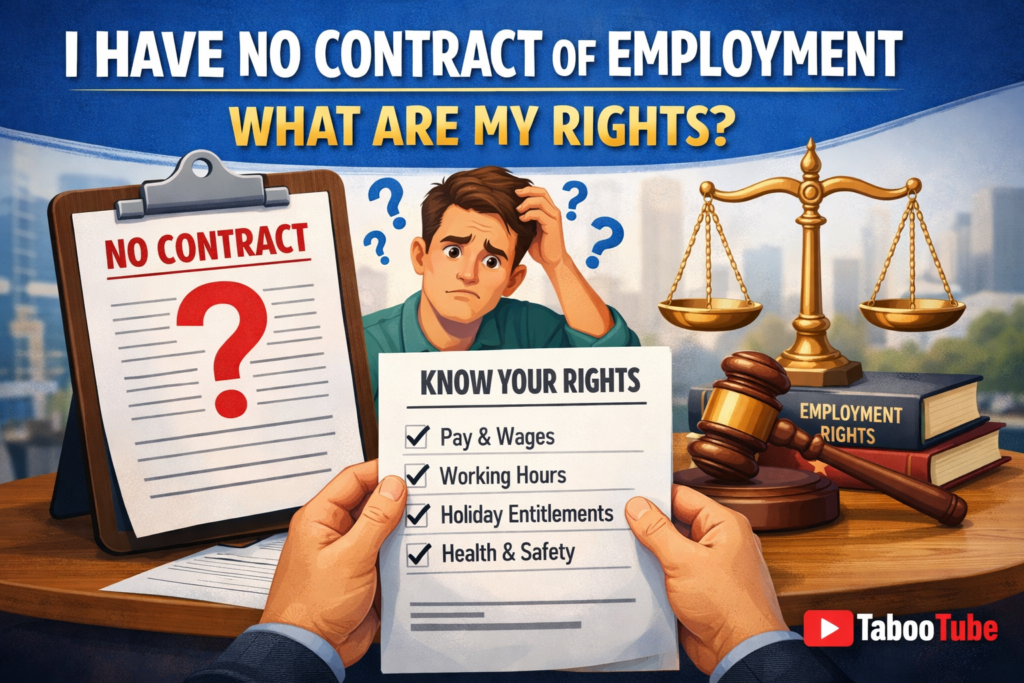
When someone says, “I have no contract of employment, what are my rights?”, it can feel confusing and worrying. Many people believe that without a signed piece of paper, they have no legal protection at work, but this is not true. A contract of employment is an agreement between you and your employer that outlines the terms of your job, such as pay, hours, duties, and benefits. This contract can be written, verbal, or even implied through the way you work. For example, if you work at a company, get paid regularly, and follow instructions from a manager, you likely already have an implied contract even if nothing is written down.
The main idea is that a contract doesn’t always have to be on paper. Verbal agreements, emails, payslips, or even company policies can all form part of your employment agreement. Understanding this is key because even without a written contract, you may still have rights such as minimum wage, holiday pay, and protection from unfair dismissal. A case study from the UK shows that in disputes, courts often look at the actual work relationship, not just whether a contract exists. For instance, a worker who consistently performed tasks, received instructions, and got paid was recognized as having the same rights as someone with a written contract, proving that employment rights are tied to work, not just paperwork.
Do You Still Have Employment Rights Without a Written Contract?
Many people worry that if they have no written agreement, they have no legal protections, but this is a common misunderstanding. Even if you do not have a formal contract of employment, you still have rights under the law. In the UK, for example, employment rights are not solely dependent on having a signed document; they are based on the existence of an employment relationship. If you work for an employer, follow instructions, and receive regular payment, the law usually considers you an employee or a worker. This means that statutory protections such as the national minimum wage, holiday pay, rest breaks, and protection from unfair dismissal still apply. Courts and employment tribunals often examine evidence such as payslips, emails, job descriptions, and even text messages to determine the reality of the working relationship. Therefore, even without a written contract, the work you perform and the obligations your employer imposes on you can establish legal rights that must be respected.
Having employment rights without a formal contract also means you are entitled to protections that might not be obvious at first. For instance, you are still covered by anti-discrimination laws, health and safety regulations, and rights to protection from unlawful deductions from wages. Employers cannot simply ignore these responsibilities because a written contract is absent. In fact, the absence of a written agreement can sometimes strengthen a worker’s case if disputes arise, as it shifts focus onto the actual working conditions and employer practices rather than technical paperwork. Case studies in the UK have shown that workers who challenged unfair treatment without having formal contracts often succeeded because the law recognizes the real-life work relationship over written formalities. Understanding this principle empowers workers to know that they do not lose their basic rights simply because a piece of paper is missing and highlights the importance of keeping records like payslips, emails, and correspondence to demonstrate employment terms if any dispute arises.
Core Statutory Rights You Still Have Without a Contract
Even without a written contract, there are several core statutory rights that apply to every worker or employee. These rights are protected by law and cannot be waived simply because you have no formal agreement with your employer. For example, you are entitled to receive at least the national minimum wage, which ensures that all workers are paid fairly for the hours they work. This applies whether you have a contract or not, and employers are legally required to comply. You are also entitled to paid annual leave, which typically amounts to 28 days including public holidays in the UK for full-time employees. Other statutory rights include rest breaks, working hours limits, and the right to a safe and healthy workplace. These protections are designed to prevent exploitation and ensure basic fairness, even if an employer does not provide a written contract. Employment tribunals and courts often enforce these rights based on evidence of the working relationship, such as payroll records, emails, or even witness testimony, which helps workers prove their entitlements even in the absence of formal paperwork.
In addition to pay and leave, there are other important rights that remain in force. Workers without contracts are still protected from unlawful deductions from wages, meaning an employer cannot withhold pay without a lawful reason, and you have the right to receive clear payslips showing what you are being paid and any deductions made. You are also covered under anti-discrimination laws, which protect against unfair treatment based on age, gender, race, religion, disability, or other protected characteristics. Furthermore, workplace safety laws ensure that your employer must provide a safe environment and take reasonable steps to prevent accidents or harm. Even though you might not have a written contract specifying these details, the law still recognizes these rights as fundamental to any employment relationship. Real-world examples show that employees who raised complaints about unpaid wages, denied holiday entitlement, or unsafe working conditions often succeeded because their rights are legally protected regardless of the absence of formal contracts, proving that statutory protections are powerful tools for all workers.
Employment Status and Why It Matters
Understanding your employment status is crucial when you find yourself without a written contract because it determines the full range of rights and protections available to you. Not every person working for a business is automatically considered an employee; some may be classified as a “worker” or “self-employed contractor,” and the rights can differ significantly depending on this status. Employees generally have the most extensive legal protections, including entitlement to redundancy pay, protection from unfair dismissal, and parental leave, whereas workers have fewer rights but still retain fundamental protections such as minimum wage, holiday pay, and workplace safety. Self-employed individuals, on the other hand, have very limited rights under employment law and are primarily responsible for their own taxes, insurance, and working conditions. Determining whether you are an employee or a worker often involves looking at factors such as how much control the employer has over your work, whether you are integrated into the organization, the level of supervision you receive, and whether payment is regular and agreed upon. Legal tribunals frequently emphasize that the reality of the working relationship outweighs the absence of paperwork, meaning that even without a written contract, your status can still be established based on your day-to-day work and interactions with your employer.
Employment status not only affects the rights you can claim but also impacts the steps you can take if disputes arise. For example, employees have stronger protection when it comes to dismissals, notice periods, and access to grievance procedures, while workers without a contract must often rely on statutory minimums to assert their entitlements. It is common for employers to misclassify staff as self-employed or casual workers to avoid providing full rights, but the law recognizes these tactics, and workers can challenge them if the actual working conditions demonstrate an employment relationship. Case studies have shown that tribunals consistently side with workers whose duties, responsibilities, and integration into the business clearly indicate employee status, even when no written contract exists. Knowing your status empowers you to claim the correct rights, negotiate better terms, and take informed action to protect your interests, proving that employment law is designed to safeguard all workers regardless of formal documentation.
Notice Periods and Ending the Job
Even without a written contract, you still have certain rights when it comes to leaving a job or being dismissed. Many people assume that if there is no contract, an employer can terminate them at any time without warning, but this is not entirely true. In most countries, including the UK, there are statutory notice periods that both employees and workers are entitled to receive. This means that even if your employer has not provided a formal contract, they are legally required to give you a minimum period of notice before ending your employment, which is often one week if you have been employed for more than a month, and increases with longer service. Likewise, if you decide to leave, you are generally expected to provide reasonable notice to your employer, though in the absence of a written contract, this can sometimes be negotiated. Understanding these rights is important because it prevents abrupt terminations or sudden loss of income, giving workers a degree of stability and time to make alternative arrangements.
Your final pay and benefits are also protected even if you have no contract. You are entitled to receive all wages you have earned up to your last day, including any accrued holiday pay, overtime, or other contractual benefits that have been regularly provided, and employers cannot lawfully withhold this money. In addition, if disputes arise regarding notice periods or payment, tribunals and employment courts will often consider the regular practices and communications between you and your employer, such as emails, text messages, or payslips, as evidence of agreed terms. Real-world examples show that employees without formal contracts who were unfairly dismissed or denied final wages were able to reclaim their rights by demonstrating the actual working relationship, proving that the law focuses on the reality of employment rather than paperwork. Knowing your rights in these situations not only ensures fair treatment but also provides a strong foundation for protecting your financial and legal interests when leaving a job.
Risks of Working Without a Contract
Working without a written contract can create several risks and uncertainties that many people do not initially realize. Without a formal document, the terms of your employment—such as pay, working hours, duties, and benefits—are not clearly defined, which can lead to misunderstandings or disputes with your employer. For instance, you might assume you are entitled to certain breaks, holiday pay, or overtime rates, but without a written record, proving these entitlements can be more difficult. Employers might take advantage of the lack of formal agreements by making sudden changes to your work schedule, reducing hours, or adjusting pay, and while statutory protections do exist, enforcing them often requires collecting evidence and sometimes pursuing legal action. Studies and case examples have shown that workers in these situations frequently face stress and financial uncertainty because they lack a clear framework defining their rights and obligations.
Another major risk of working without a contract is the difficulty in resolving disputes. When disagreements arise over pay, responsibilities, or termination, the absence of a written agreement means that you must rely on indirect evidence, such as emails, messages, payslips, and witness testimony, to prove what was agreed upon. This can make legal proceedings more complicated and time-consuming. Furthermore, being without a contract may leave you more vulnerable to misclassification as self-employed or casual staff, which can limit your access to certain rights and protections. Despite these risks, the law still provides statutory safeguards that protect workers, and tribunals often prioritize the actual employment relationship over the existence of formal paperwork. Understanding these risks is essential for employees and workers to take proactive steps, such as keeping records and documenting communications, in order to protect themselves from potential exploitation or misunderstandings.
How to Protect Your Rights Without a Written Contract
Even if you have no written contract of employment, there are several ways to protect your rights and ensure fair treatment at work. The first step is to maintain thorough records of your employment, including payslips, emails, text messages, and any other communications that demonstrate your duties, hours, and pay. These documents can serve as evidence if disputes arise regarding pay, working conditions, or termination. You should also request a written statement of employment particulars from your employer, which, by law in many countries including the UK, they are required to provide within a few weeks of starting work. This statement outlines your job title, pay, working hours, and other essential information, and while it is not a full contract, it provides a reference point for your rights. By proactively documenting your work and confirming key details in writing, you create a strong foundation to support your claims if any disagreements occur.
Seeking legal advice or support is another crucial step for workers without a formal contract. Employment advisory services, union representatives, and legal professionals can help clarify your status, explain your rights, and guide you through disputes with your employer. For example, if your employer refuses to pay your earned wages, denies holiday entitlement, or treats you unfairly, having professional guidance can help you take the correct steps, including submitting a claim to an employment tribunal. Real-life examples demonstrate that workers who collect evidence and seek advice are often able to assert their rights successfully, even when no written contract exists. Knowing how to document your work, request formal statements, and access legal support empowers employees and workers to protect themselves, ensuring that the absence of a contract does not mean a lack of rights or recourse.
FAQs About “No Contract and Employment Rights”
Many people frequently ask, “I have no contract of employment, what are my rights?” and there are several common questions that arise in these situations. One of the most common concerns is whether a verbal agreement or informal arrangement counts as a contract, and the answer is yes, it often does. The law recognizes implied contracts, which are based on the reality of the working relationship rather than on paperwork. For instance, if you regularly perform tasks, follow instructions from a manager, and receive payment for your work, this demonstrates an employment relationship, and you are entitled to statutory rights such as minimum wage, holiday pay, and protection from unfair dismissal. Another frequent question is whether workers can leave immediately without notice when no contract exists. While there may not be formal terms, it is generally expected to provide reasonable notice, and failing to do so could affect final pay or references. Understanding these nuances helps workers navigate their rights confidently, even in the absence of a written contract.
Other common concerns involve pay, benefits, and discrimination protections. Many people worry that without a contract, employers can refuse to pay for overtime or deny holiday entitlement, but statutory laws ensure these rights are protected regardless of formal agreements. Workers are also concerned about workplace safety, discrimination, and deductions from wages, and it is important to know that these protections apply whether or not a contract exists. Real-life examples show that employees who have raised complaints about unpaid wages, denied holidays, or unsafe working conditions have successfully enforced their rights because the law prioritizes the actual employment relationship over written documentation. Knowing the answers to these questions equips workers to take informed steps, such as documenting communications, seeking legal advice, and asserting their rights, demonstrating that lacking a formal contract does not mean lacking protection or recourse.
Conclusion: Your Rights Even Without a Contract
In summary, having no written contract of employment does not mean you have no rights at work. Even without formal documentation, the law recognizes the reality of your working relationship and ensures that basic protections, such as minimum wage, holiday pay, rest breaks, workplace safety, and protection from unfair dismissal or discrimination, still apply. The absence of a contract can make it more challenging to prove certain terms, but courts and tribunals will often consider evidence such as payslips, emails, text messages, and consistent work patterns to establish your entitlements. This means that the rights you have are not determined by paperwork but by the actual way you work, the instructions you follow, and the pay and benefits you receive. Understanding this empowers workers to recognize that they are not powerless simply because a signed contract is missing and encourages proactive steps to protect their interests.
It is important to take practical measures to safeguard your rights when you have no contract. Keeping clear records, requesting written statements of employment particulars, and seeking legal advice when disputes arise are all crucial steps in ensuring fair treatment. Real-world examples show that workers who take these actions are often successful in asserting their rights, even in complex situations where employers have tried to exploit the absence of a contract. Ultimately, knowledge and preparation are your strongest tools. By understanding your rights, documenting your work, and being aware of the protections the law provides, you can confidently navigate your employment situation and ensure that lack of a formal contract does not result in a loss of rights or legal recourse.