Table of Contents
Introduction – Why Compare 1500 RAM vs 2500 RAM Specs?
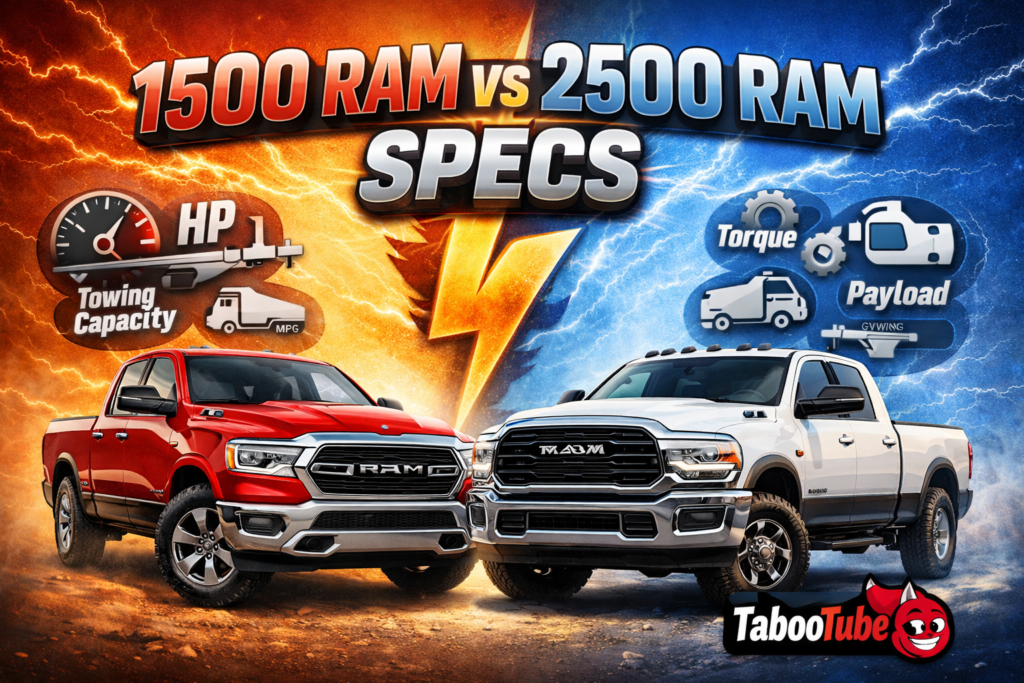
When choosing a truck, many people get confused between the RAM 1500 and RAM 2500. Both are powerful and popular trucks, but they are designed for different purposes. The RAM 1500 is a light-duty truck that is great for daily driving, commuting, and carrying moderate loads. On the other hand, the RAM 2500 is a heavy-duty truck built to handle large trailers, heavy cargo, and tough work environments. Comparing the 1500 RAM vs 2500 RAM specs is important because it helps you understand which truck fits your needs, whether you want comfort and fuel efficiency or heavy towing and payload power. In this guide, we will break down the main differences in engines, towing, payload, comfort, price, and more. By the end, you will have a clear idea of which RAM truck is right for you, making your buying decision much easier.
What Are RAM 1500 and RAM 2500?
The RAM 1500 and RAM 2500 are both popular full-size trucks from the RAM lineup, but they serve very different purposes and are built for different types of drivers. The RAM 1500 is considered a light-duty truck, designed for people who need a vehicle that is strong enough for daily work, errands, and weekend adventures but still comfortable and smooth to drive. It comes with multiple engine options, including efficient V6 engines and powerful V8s, which makes it flexible for both city driving and moderate hauling. The RAM 1500 is known for its refined ride, advanced technology, and fuel efficiency, which makes it one of the best choices for drivers who want a truck that can handle both work and everyday life without compromising comfort. Its interior is often praised for its luxurious feel, quiet cabin, and modern infotainment system, giving drivers a mix of utility and comfort that is hard to find in other trucks in its class.
The RAM 2500, on the other hand, is a heavy-duty truck built for serious work, heavy towing, and carrying large loads. It is larger, stronger, and more rugged than the RAM 1500, making it ideal for construction work, hauling big trailers, or pulling heavy campers. The 2500 has engine options with much higher torque and power, including diesel variants, which allows it to handle tasks that would be too demanding for a lighter truck. While it is not as focused on comfort as the 1500, the RAM 2500 still offers a spacious cabin, modern technology, and features that make long drives and work trips manageable. Comparing the 1500 RAM vs 2500 RAM specs shows that while both trucks are reliable and capable, the 1500 is best for everyday use with moderate needs, and the 2500 is perfect for those who require extreme towing and heavy-duty performance. Understanding these differences is the first step in deciding which truck fits your lifestyle, budget, and work requirements.
Engine Performance – 1500 RAM vs 2500 RAM Specs
When comparing the engine performance of the RAM 1500 and RAM 2500, it becomes clear that each truck is built with a different purpose in mind. The RAM 1500 offers a variety of engines that balance power and efficiency, making it suitable for both daily driving and light hauling. Most models come with a V6 engine that provides smooth acceleration and decent fuel economy, while higher trims offer V8 options for drivers who want more power for towing boats, small trailers, or carrying heavier loads. The 1500 also offers a mild hybrid option in recent models, which improves fuel efficiency and gives extra torque when needed. This combination of engine options allows drivers to choose a RAM 1500 that fits their driving style, whether they prioritize comfort, fuel savings, or occasional heavy-duty performance. Its engines are known for smooth handling, reliable performance, and a balance between strength and efficiency that suits a wide range of everyday tasks.
The RAM 2500, on the other hand, takes engine performance to a whole new level because it is designed for heavy-duty use. It offers powerful V8 engines and high-torque diesel options that are capable of towing massive trailers, carrying heavy construction materials, and performing in demanding work conditions where a lighter truck would struggle. The 2500 engines are built for durability and endurance, with extra cooling systems and reinforced components to handle continuous heavy workloads. Drivers who choose the RAM 2500 get significantly more horsepower and torque compared to the 1500, which makes it ideal for towing large campers, hauling big equipment, or navigating rough terrain with a full load. While the 2500 sacrifices some fuel efficiency compared to the 1500, the added power and strength make it a preferred choice for anyone whose work or lifestyle demands maximum performance and reliability. Comparing the 1500 RAM vs 2500 RAM specs in engine performance shows a clear distinction: the 1500 focuses on versatility and comfort for daily life, while the 2500 delivers unmatched heavy-duty capability for serious work and towing needs.
Towing Capacity Comparison – 1500 RAM vs 2500 RAM Specs
When it comes to towing capacity, the difference between the RAM 1500 and RAM 2500 becomes one of the most noticeable factors for buyers. The RAM 1500, being a light-duty truck, offers a respectable towing capacity that is suitable for everyday hauling, small trailers, boats, and campers. Depending on the engine choice and configuration, the 1500 can tow up to around 12,750 pounds, which is more than enough for most recreational and light work purposes. This makes the 1500 a versatile option for families, outdoor enthusiasts, and drivers who need a truck that can handle occasional towing without compromising comfort or fuel efficiency. Even with its towing limits, the RAM 1500 offers features such as trailer sway control, integrated trailer brake controllers, and towing assist technologies that make pulling trailers safer and easier, giving drivers confidence even if they are new to towing heavy loads. The smooth ride and refined suspension of the 1500 also help maintain stability when towing, which adds to the truck’s reputation as a reliable all-around vehicle for light to moderate towing needs.
The RAM 2500, however, is designed for drivers who require extreme towing performance for professional or heavy-duty purposes. Its towing capacity far surpasses the 1500, often reaching more than 20,000 pounds with the right engine and configuration, especially when equipped with a diesel engine. This makes the 2500 ideal for hauling large RVs, commercial trailers, construction equipment, or multiple boats at once. The truck’s heavy-duty frame, reinforced suspension, and high-torque engines ensure that towing heavy loads is safe and efficient, even over long distances or challenging terrain. While the 2500 may not match the 1500 in fuel efficiency or everyday comfort, its towing performance is unmatched in the RAM lineup, making it a top choice for anyone whose work or lifestyle demands maximum strength and reliability. Comparing the 1500 RAM vs 2500 RAM specs clearly shows that while the 1500 is perfect for lighter towing tasks, the 2500 is built to handle serious, heavy-duty towing without compromise.
Payload Capacity – How Much Can Each Truck Carry?
The payload capacity of a truck is an important factor for anyone who needs to carry heavy cargo, and comparing the RAM 1500 and RAM 2500 shows just how differently these trucks are built for this task. The RAM 1500, being a light-duty truck, offers a payload capacity that is suitable for everyday hauling, carrying furniture, tools, or smaller construction materials. Most 1500 models can carry around 2,000 pounds in the bed, which is enough for most personal and recreational uses. This makes the 1500 a versatile choice for people who need a truck that can handle work and play without being too large or difficult to drive. Even with a full load, the 1500’s suspension and chassis are designed to maintain a smooth ride, which keeps driving comfortable while carrying cargo. Features like rear load leveling and smart payload management help distribute weight evenly, ensuring that the truck remains stable and safe even when fully loaded. For many drivers, the RAM 1500 strikes a perfect balance between utility and comfort, offering enough payload capacity for most everyday needs without feeling like a heavy-duty work truck.
The RAM 2500, in contrast, is built to handle much heavier payloads, making it the go-to choice for professionals and anyone who regularly needs to transport large or dense cargo. With a payload capacity that can exceed 4,000 pounds depending on configuration, the 2500 can carry double what a 1500 can manage, allowing drivers to haul large equipment, building materials, or even multiple motorcycles at once. This heavy-duty capability is paired with reinforced suspension, a stronger frame, and high-torque engines that ensure the truck performs safely under extreme loads. While the ride may be firmer compared to the 1500, the 2500 is designed for reliability and endurance, making it ideal for long-term, heavy-duty use. Comparing the 1500 RAM vs 2500 RAM specs in payload capacity makes it clear that if your work or hobbies require carrying large, heavy loads frequently, the 2500 provides unmatched strength and practicality, whereas the 1500 is perfect for lighter tasks that prioritize comfort and everyday usability.
Price and Value – Choosing the Right Truck
When considering price and value, the difference between the RAM 1500 and RAM 2500 becomes very clear, as each truck targets a different audience with different needs and budgets. The RAM 1500 is generally more affordable, making it an attractive option for buyers who want a capable full-size truck without spending too much. Its lower starting price combined with modern features, comfortable interiors, and efficient engines gives buyers excellent value for everyday use. Even higher trims of the 1500, which include premium technology, advanced safety features, and luxurious materials, remain reasonably priced compared to heavy-duty trucks, allowing owners to enjoy a mix of comfort, style, and performance without paying a heavy premium. For people who plan to use their truck for commuting, light towing, family trips, or recreational activities, the RAM 1500 provides the perfect balance between cost and capability, ensuring that buyers get a reliable, versatile truck without unnecessary expense.
The RAM 2500, on the other hand, comes with a higher price tag, reflecting its heavy-duty capabilities, powerful engines, and reinforced build designed for professional or demanding work. The higher starting cost is justified by the truck’s ability to tow massive trailers, carry extremely heavy payloads, and handle intense workloads over long periods without compromising performance. While the 2500 may require a larger investment upfront and incur slightly higher fuel and maintenance costs, it delivers unmatched value for those who need serious power and reliability every day. Businesses, contractors, and drivers who frequently tow or haul will find that the RAM 2500 offers long-term savings through durability, efficiency under heavy use, and lower downtime compared to lighter trucks. Comparing the 1500 RAM vs 2500 RAM specs in terms of price and value shows that the 1500 is perfect for budget-conscious buyers who want comfort and versatility, while the 2500 is a smart investment for anyone whose work or lifestyle demands maximum strength, capability, and reliability.
Features, Comfort, and Interior
The RAM 1500 is well-known for its impressive combination of features, comfort, and interior design, making it one of the most popular trucks for everyday drivers. Inside the 1500, you will find a spacious and well-designed cabin that balances functionality with style. High-quality materials, comfortable seats, and advanced infotainment systems make driving a pleasant experience, even on long trips. The 1500 often includes modern conveniences like touchscreen displays, smartphone connectivity, premium sound systems, and driver-assist technologies that enhance safety and ease of use. Despite being a light-duty truck, it doesn’t compromise on comfort, offering features such as heated and ventilated seats, adjustable steering wheels, and quiet cabin insulation that reduce road noise. For anyone who values a smooth and comfortable ride without losing the ability to handle work tasks or weekend adventures, the RAM 1500 delivers an interior experience that rivals many luxury vehicles in the full-size truck segment. The attention to detail and well-thought-out design make it ideal for families, commuters, and those who want a truck that can do it all.
The RAM 2500, while focused more on heavy-duty performance, still offers a strong level of comfort and features that make long drives and workdays more manageable. Its interior is more rugged but spacious, built to withstand heavy use while providing driver-friendly technology and practical storage solutions. The 2500 includes many of the same modern amenities found in the 1500, such as touchscreen infotainment, connectivity features, and driver assistance, but it is designed to prioritize durability and functionality over luxury. Seats are supportive for long hours on the road, and the cabin layout is practical for drivers who need easy access to controls while managing heavy towing or payload tasks. The suspension and seating are tuned to handle large loads and rough terrain while still offering a comfortable experience. Comparing the 1500 RAM vs 2500 RAM specs in features and interior shows that the 1500 excels in luxury and everyday comfort, while the 2500 focuses on combining durability with practical features for heavy-duty use, giving drivers the choice between a refined daily truck and a strong, work-ready powerhouse.
Fuel Economy and Running Costs
The RAM 1500 stands out for its impressive fuel efficiency among full-size trucks, making it a practical choice for drivers who plan to use their truck for daily commuting or long road trips. With its range of engine options, including V6, V8, and even mild hybrid setups, the 1500 offers drivers the flexibility to prioritize fuel savings or power depending on their needs. The V6 engines provide decent mileage, allowing the truck to cover longer distances with fewer stops at the gas station, while the V8 and hybrid engines give extra torque and power without a huge sacrifice in fuel economy. Maintenance costs for the RAM 1500 are generally lower compared to heavy-duty trucks, as the lighter frame and less strenuous workload reduce wear and tear on critical components. Insurance rates are also more affordable, making the 1500 a budget-friendly option for people who want a reliable truck with strong performance and comfort without facing high running costs. Overall, the 1500 is designed to be economical while still offering versatility, which appeals to everyday drivers who need a capable truck without paying for unnecessary heavy-duty features.
The RAM 2500, in contrast, has higher fuel consumption and running costs, reflecting its heavy-duty design and powerful engines. Its larger frame, reinforced suspension, and high-torque engines, especially diesel options, allow it to tow massive trailers and carry extremely heavy payloads, but this comes at the expense of fuel efficiency. Drivers can expect lower miles per gallon compared to the 1500, particularly when hauling heavy loads or driving long distances. Maintenance costs may also be higher over time due to the truck’s heavy-duty components, although the reinforced build and robust engineering mean the truck is less likely to face major breakdowns even under continuous heavy use. Insurance can also be more expensive for the 2500 because of its size and higher replacement costs. Despite these increased costs, the RAM 2500 delivers unmatched capability and reliability, making it a worthwhile investment for those who need a truck for professional work, towing, or hauling heavy cargo regularly. Comparing the 1500 RAM vs 2500 RAM specs in fuel economy and running costs highlights that the 1500 is ideal for efficiency and everyday use, while the 2500 excels in strength and durability for serious work, even if it requires higher fuel and maintenance expenses.
Which Truck Should You Choose? Decision Based on Specs
Choosing between the RAM 1500 and RAM 2500 ultimately depends on your lifestyle, work requirements, and how you plan to use the truck. The RAM 1500 is the perfect choice for anyone who wants a full-size truck that is comfortable, fuel-efficient, and versatile enough for daily driving, family trips, and light towing or hauling. Its smooth ride, modern interior features, and manageable size make it ideal for city driving as well as weekend adventures. If you do not need extreme towing or heavy-duty payload capabilities, the 1500 provides more than enough power and flexibility, allowing you to enjoy the benefits of a capable truck without the higher fuel and maintenance costs associated with larger, heavier trucks. The 1500 is also easier to handle in tight spaces, parks more conveniently, and offers a quieter, more refined driving experience, making it a great all-around truck for those who value comfort alongside utility.
The RAM 2500 is designed for drivers who need maximum strength, durability, and heavy-duty performance on a regular basis. If your work involves hauling massive trailers, transporting heavy equipment, or towing campers and boats frequently, the 2500 is the truck that can handle these tasks with confidence and reliability. Its reinforced frame, powerful engines, and higher towing and payload capacities make it the preferred choice for professional drivers, contractors, and anyone who cannot compromise on performance. While the 2500 comes with higher fuel and running costs and may not feel as smooth or refined as the 1500 on regular roads, its capability to manage extreme workloads is unmatched. Comparing the 1500 RAM vs 2500 RAM specs clearly shows that the 1500 is ideal for comfort, versatility, and light-duty use, while the 2500 is the heavy-duty powerhouse that delivers unmatched strength and reliability for work-intensive tasks. Your decision should be based on evaluating your daily driving needs, work requirements, and long-term investment in a truck that matches your lifestyle.
Frequently Asked Questions (FAQs)
Many people have questions when deciding between the RAM 1500 and RAM 2500, and understanding the answers can make the choice much easier. One common question is whether the RAM 2500 is much stronger than the RAM 1500. The answer is yes, as the 2500 is built for heavy-duty tasks and can handle much larger loads, both in towing and payload, than the 1500. Another frequent question is whether the 1500 can tow as much as the 2500. While the 1500 offers respectable towing capacity for light to moderate trailers, boats, and campers, it cannot match the 2500’s ability to tow extremely heavy loads over long distances. People also ask about fuel costs, and here the difference is clear: the 1500 is more fuel-efficient, especially with its V6 and mild hybrid options, while the 2500 consumes more fuel due to its larger engines and heavier build. Finally, questions about reliability often come up, and both trucks are known for their durability, but the 2500 is engineered to endure extreme workloads and tough conditions for professional use, whereas the 1500 is optimized for everyday driving with occasional heavy-duty needs.
Other questions often focus on engines and long-term ownership, such as which engine is best for longevity and daily use. In the RAM 1500, the V6 and V8 engines are reliable, smooth, and provide a good balance of power and fuel efficiency, making them ideal for most drivers. In the RAM 2500, the diesel engine option is particularly popular among those who require maximum torque and towing ability, as it offers exceptional strength and durability for heavy workloads. People also ask which truck is better for comfort and technology, and the answer depends on priorities: the 1500 focuses on refined interiors, smooth rides, and user-friendly tech for everyday driving, while the 2500 prioritizes durability, ruggedness, and practical features for work environments, though it still includes modern technology for convenience. Comparing the 1500 RAM vs 2500 RAM specs in the FAQ section helps potential buyers clearly see which truck matches their needs, whether they are looking for efficiency, comfort, towing power, or extreme heavy-duty performance, providing answers that make the decision process much simpler and more confident.
Conclusion – Summary of 1500 RAM vs 2500 RAM Specs
In conclusion, comparing the 1500 RAM vs 2500 RAM specs highlights the distinct purposes and strengths of each truck, helping buyers choose the right vehicle for their needs. The RAM 1500 stands out as a versatile, comfortable, and fuel-efficient truck that is ideal for everyday driving, family trips, and light towing or hauling. Its smooth ride, refined interior, advanced technology, and multiple engine options make it a practical choice for those who want a reliable full-size truck without compromising comfort or budget. For drivers who value efficiency, usability, and a balance of power and features, the 1500 provides excellent value and flexibility. Its capabilities are more than sufficient for moderate loads and recreational towing, making it the perfect companion for daily life while still offering the strength and durability that drivers expect from a RAM truck.
The RAM 2500, however, is the heavy-duty champion in the RAM lineup, built for drivers who need maximum power, towing, and payload capacity on a regular basis. With its reinforced frame, high-torque engines, and ability to handle extreme workloads, the 2500 is ideal for professional use, construction work, hauling large trailers, or towing heavy campers. While it has higher fuel consumption and running costs compared to the 1500, its durability, strength, and performance make it a worthy investment for anyone whose work or lifestyle demands reliability under heavy-duty conditions. Comparing the 1500 RAM vs 2500 RAM specs ultimately shows that the 1500 is best suited for everyday comfort and versatility, while the 2500 is unmatched for towing, hauling, and extreme performance. Understanding these differences ensures that buyers can make an informed decision based on their specific needs, whether they prioritize comfort, efficiency, or heavy-duty capability, giving them confidence in choosing the right RAM truck for their lifestyle.