Table of Contents
What Are 14.5 Mobile Home Tires and Rims?
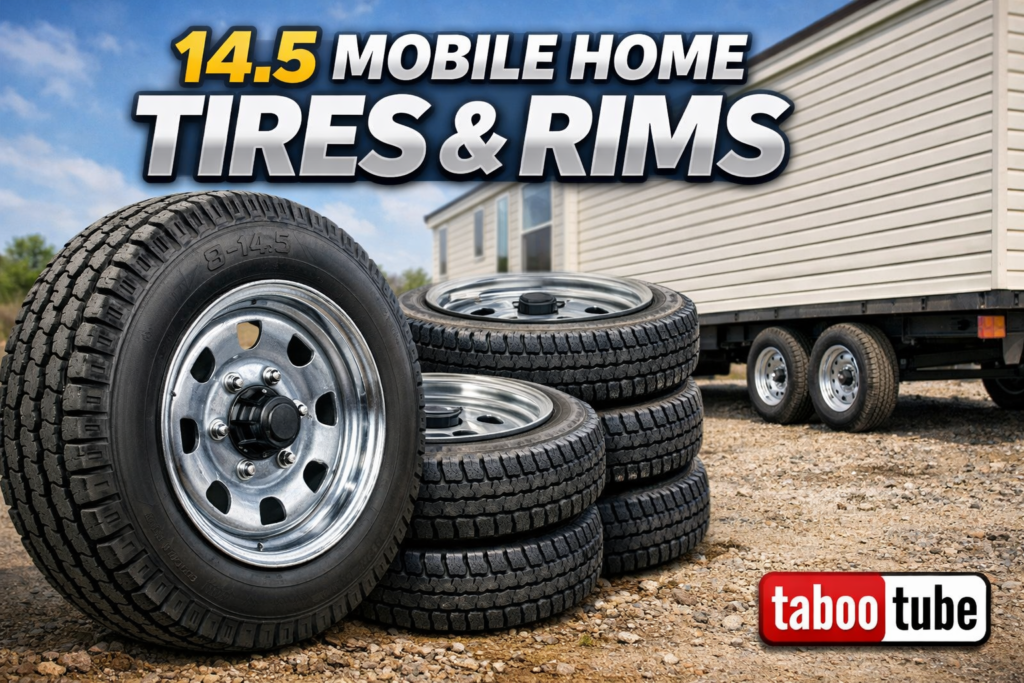
14.5 mobile home tires and rims are a specialized type of wheel designed specifically for mobile homes, trailers, and park model homes. The number “14.5” refers to the rim diameter in inches, while the number before the dash (like 7‑14.5 or 8‑14.5) refers to the tire width. These tires are not like regular car or truck tires because mobile homes are heavier and have a different weight distribution. They are designed to handle large loads while providing stability during towing or stationary use.
Mobile home tires come in different ply ratings and load ranges, which indicate how much weight a tire can safely carry. For example, a tire marked as “Load Range H” is built to support heavier mobile homes, whereas a lower load range is suitable for lighter homes. Similarly, rims are designed to fit these specific tires and ensure proper mounting. Using the wrong size or type can lead to safety hazards, including tire blowouts, uneven wear, and instability when towing.
Understanding Tire Size and Specifications
When it comes to 14.5 mobile home tires and rims, understanding the size and specifications is one of the most important factors for ensuring safety, stability, and longevity. The numbers on a tire, such as 7‑14.5, 8‑14.5, or 9‑14.5, carry crucial information about the tire’s width and rim diameter. The first number, for example, 7 or 8, represents the tire width in inches, while 14.5 indicates the diameter of the rim it is designed to fit. These measurements are critical because even a small mismatch between tire width and rim size can cause poor handling, uneven wear, or even tire failure during towing or long-term stationary use. Mobile home tires are different from regular vehicle tires because they are built to carry heavier loads at slower speeds, and their design focuses on stability rather than high-speed performance. In addition to width and rim diameter, the load range and ply rating are equally important. A tire’s load range, such as Load Range C, D, or H, indicates the maximum weight it can safely carry, while the ply rating indicates the strength of the tire’s internal structure. For mobile homes, heavier units often require tires with a higher load range and ply rating to prevent issues like sagging or blowouts, and using tires with the wrong specifications can result in dangerous conditions on the road or in the park.
Understanding these specifications also helps mobile home owners choose the right tires for their particular setup. For instance, a 9‑14.5 tire has a wider footprint than a 7‑14.5 tire, which means it can distribute the weight more evenly and provide better stability, especially for larger mobile homes or homes with additional axles. Ply rating affects how well the tire can handle the weight without deforming, and higher-rated tires are designed to last longer under heavy loads. Beyond just numbers, mobile home tires are constructed with reinforced sidewalls to handle the weight and prevent sidewall bulging, a common problem when tires are overloaded or improperly inflated. Rim compatibility is also essential because a tire must fit securely on the rim to ensure safe operation. Steel rims are commonly used for their durability and resistance to bending, while alloy rims are lighter and may improve fuel efficiency during towing. By understanding tire size, load range, ply rating, and rim type, mobile home owners can make informed decisions that maximize both safety and performance, ensuring that their 14.5 mobile home tires and rims provide years of reliable use without compromising comfort or security.
How to Choose the Best 14.5 Mobile Home Tires and Rims
Choosing the best 14.5 mobile home tires and rims requires careful consideration of several key factors, starting with the weight and size of your mobile home. Every mobile home comes with manufacturer specifications that recommend the appropriate tire size, load range, and rim type to ensure optimal safety and performance. It is important to match the tire size precisely to your mobile home’s requirements because even a small deviation can lead to uneven wear, decreased stability, and a higher risk of tire failure while towing or stationary. In addition to size, the load capacity of the tire must accommodate the weight of the home plus any additional cargo. For example, a heavier mobile home may require an 8‑14.5 or 9‑14.5 tire with a Load Range H to properly support the weight, whereas smaller homes may only require a 7‑14.5 tire. Rims are equally important because they must fit the tire snugly and be made from materials capable of handling the weight and stress of the home. Steel rims are commonly chosen for their durability and ability to withstand road bumps, potholes, and long-term wear, while alloy rims, although lighter, are sometimes selected for better fuel efficiency during towing. Choosing the correct combination of tire and rim ensures smoother rides, better handling, and increased safety, especially on long trips or in varying weather conditions.
Another important aspect of selecting the right 14.5 mobile home tires and rims is understanding the type of terrain and usage your home will experience. Mobile homes are not just stationary units; many are frequently moved between parks or homesites, which means tires must perform reliably on highways, gravel roads, and in different weather conditions. Tires with reinforced sidewalls, appropriate ply ratings, and high-quality rubber compounds will resist bulging, cracking, or uneven wear. It is also advisable to consider tire brands with proven reliability and strong warranties, as well as rims that are corrosion-resistant, particularly if the home will be in humid or coastal environments. While it may be tempting to choose the cheapest option available, investing in high-quality 14.5 mobile home tires and rims will ultimately save money and prevent accidents or breakdowns. Properly chosen tires and rims not only improve safety but also enhance towing efficiency, reduce stress on the axles, and provide a more comfortable ride for the mobile home structure. Taking the time to research and select the right products based on load capacity, size, construction, and durability ensures that your mobile home will remain stable, secure, and well-supported for years to come.
Where to Buy 14.5 Mobile Home Tires and Rims
Finding the right place to buy 14.5 mobile home tires and rims is just as important as choosing the correct size and load rating because the quality, warranty, and service can vary significantly between sellers. Many mobile home owners turn to local tire shops or RV dealerships that specialize in mobile home equipment because these outlets often carry tires and rims specifically designed for mobile homes and can provide expert guidance on proper fitment. Buying from a reputable local dealer also allows you to inspect the tires and rims in person, ensuring there are no defects, cracks, or damage before installation. In addition to local shops, online retailers have become increasingly popular because they offer a wider selection of sizes, brands, and price ranges. Online stores may provide pre-mounted tire and rim packages, which can save time and ensure compatibility, while also offering detailed product descriptions, customer reviews, and shipping directly to your home or dealer. When buying online, it’s important to purchase from trusted websites that specialize in mobile home or trailer tires, as generic automotive stores may carry tires that are not suitable for the unique load and structural requirements of mobile homes. Choosing a supplier with clear return policies, warranties, and customer support is critical because it protects you against defective products or sizing mistakes that could otherwise result in unsafe conditions or costly replacements.
Price and value considerations also play a major role in determining where to buy 14.5 mobile home tires and rims, but it is important to remember that the cheapest option is not always the safest or most reliable. Mobile home tires are a long-term investment in safety and performance, and purchasing high-quality tires and rims from a trusted retailer can prevent accidents, breakdowns, or premature wear that might otherwise lead to additional expenses. Many online retailers provide comparison tools and bundles that include both tires and rims at a competitive price, which can be convenient for first-time buyers or those replacing an entire set. Local dealers often offer installation services or can recommend certified technicians to mount and balance the tires correctly, which is another factor to consider when purchasing. Additionally, some sellers provide expert guidance on seasonal considerations, such as tire care in extreme heat or cold, and can advise on the best products for your specific mobile home model. By researching both online and local options, checking customer reviews, comparing warranties, and confirming product specifications, mobile home owners can confidently purchase 14.5 mobile home tires and rims that meet their safety, durability, and performance needs while also ensuring peace of mind for every journey or stationary setup.
Installation and Fitment Guide for 14.5 Mobile Home Tires and Rims
Proper installation and fitment of 14.5 mobile home tires and rims is essential for safety, performance, and longevity, as even the highest-quality tires can fail if mounted incorrectly. The first step in installation is ensuring that both the tires and rims are the correct size and load rating for your mobile home, and that the rims are free from defects or rust that could compromise the seal. Before mounting, it is important to inspect the tire for any damage, including cracks, punctures, or irregularities in the sidewall or tread, and to make sure the rim surface is clean and smooth. Installing mobile home tires involves carefully aligning the tire bead with the rim and gradually inflating the tire to seat it correctly while monitoring the pressure. Tightening the lug nuts evenly in a crisscross pattern is critical to avoid warping the rim or creating uneven stress points that could lead to dangerous handling issues or premature tire wear. Many mobile home owners choose to have this work done by a professional, as specialized tools and experience ensure the tires are mounted securely, balanced correctly, and ready for both towing and stationary use without risk of separation or vibration.
In addition to correct mounting, understanding the proper fitment ensures that the tires perform as designed under load and stress. Mobile home tires must sit flush with the rims, and the correct bolt pattern and hub alignment are essential for stability. Even a slight misalignment can cause wobbling, uneven tire wear, or excessive strain on the axles, which can be especially dangerous when traveling at highway speeds. After installation, it is recommended to check tire pressure regularly and inspect the lug nuts for tightness after the first few miles of travel to ensure the tires remain secure. For mobile home owners who frequently move their homes between sites, having tires and rims installed correctly also reduces stress on the suspension system and prevents damage to the undercarriage. Using quality tires and rims combined with proper installation and fitment practices ultimately provides a safer, smoother, and more reliable experience, whether the mobile home is being towed across long distances or remaining stationary for extended periods. Correct installation not only improves the safety and stability of the home but also prolongs the life of the tires, reduces the risk of costly repairs, and gives peace of mind that the mobile home is supported by a solid and dependable wheel system.
Maintenance Tips for Longer Tire Life
Maintaining 14.5 mobile home tires and rims properly is essential to ensure safety, extend tire life, and protect your investment, as mobile home tires carry heavy loads and are subject to both road and environmental stress. Regular tire maintenance begins with keeping tires properly inflated to the manufacturer-recommended pressure, which is critical because underinflated tires can cause excessive heat buildup, leading to premature wear, sidewall damage, or even blowouts. Overinflated tires, on the other hand, may wear unevenly across the center tread and reduce traction, making the mobile home less stable, especially during towing. In addition to monitoring air pressure, tires should be regularly inspected for signs of damage, such as cracks, cuts, punctures, or irregular wear patterns that might indicate alignment issues or overloaded axles. Cleaning tires and rims periodically is also important to remove dirt, salt, and other corrosive materials that can weaken the tire or rust the rims, particularly in areas with harsh winters or high humidity. Mobile home owners should also rotate tires when recommended, even if usage is limited, to ensure even wear and prevent any single tire from bearing more weight than others over time. Proper maintenance not only keeps the tires in good working condition but also improves handling, increases fuel efficiency during towing, and reduces stress on the suspension system, helping to avoid costly repairs.
Beyond basic inspections and pressure checks, knowing when to replace tires and rims is another vital aspect of maintenance. Mobile home tires have a limited lifespan, usually determined by both age and usage, even if the tread appears adequate. Many tire manufacturers recommend replacing tires every five to seven years, regardless of visible wear, because the rubber compounds degrade over time, reducing the tire’s ability to support heavy loads safely. Rims should also be checked for bends, cracks, or corrosion, as a damaged rim can compromise the tire seal and cause dangerous leaks or blowouts. Seasonal considerations are also important; for example, exposure to extreme heat can accelerate tire aging, while cold climates may cause cracking if tires are not properly maintained. Using protective tire covers for stationary mobile homes can shield the tires from UV rays and environmental damage, further extending their life. Consistent and thorough maintenance practices not only preserve the safety and performance of 14.5 mobile home tires and rims but also provide peace of mind, ensuring that the mobile home remains stable, secure, and reliable whether it is being towed on the road or parked in a long-term location.
Safety Considerations for 14.5 Mobile Home Tire Systems
Safety is the most important factor when it comes to 14.5 mobile home tires and rims because mobile homes are large, heavy structures that rely entirely on their wheel systems for stability and secure movement. Using the correct tires and rims according to manufacturer specifications is essential to prevent accidents, blowouts, or structural damage. Mobile home tires are specifically designed to handle heavy loads at low to moderate speeds, and substituting them with standard car or truck tires can be extremely dangerous, as they may not have the necessary load capacity or reinforced sidewalls. Proper load distribution across all tires and axles is critical, especially during towing, because uneven weight can cause excessive stress on certain tires, leading to overheating or premature wear. Additionally, tires must be maintained at the correct pressure and inspected for signs of cracking, bulging, or tread separation, as neglecting these safety checks can compromise the mobile home’s stability and increase the risk of accidents on the road or even when stationary. Safety considerations also extend to the rims, which must be undamaged and securely mounted, as a bent or cracked rim can cause air loss, uneven tire wear, and dangerous handling problems. Understanding these risks emphasizes the importance of not cutting corners when purchasing, installing, or maintaining 14.5 mobile home tires and rims, because the consequences of neglect can be severe for both the mobile home and its occupants.
Another key aspect of safety for mobile home tire systems is proper towing practices and adherence to speed limits recommended for the tires and load. Mobile home tires are not designed for high-speed travel like regular highway vehicles, and exceeding the recommended speed can increase heat buildup, potentially causing tire failure. The correct load range and ply rating ensure that each tire can handle its share of the home’s weight, but overloading even a single tire can result in dangerous instability or blowouts. Regularly inspecting tires before towing, checking lug nut tightness, and ensuring the axles are in good condition are crucial steps to maintain overall safety. Environmental factors, such as hot pavement in summer or icy roads in winter, further highlight the need for tires that are both properly rated and well-maintained. Using quality tires and rims, performing routine inspections, and following safe towing practices not only protect the mobile home and its occupants but also enhance the performance and lifespan of the tires themselves. By taking safety seriously and investing in the correct 14.5 mobile home tires and rims, owners can travel and park with confidence, knowing that their wheel system provides reliable support, stability, and protection under all conditions.
FAQ About 14.5 Mobile Home Tires and Rims
Many mobile home owners have questions about 14.5 mobile home tires and rims, and understanding these details is crucial for safe and effective use. One common question is what size tire is best for a particular mobile home. The answer depends on the manufacturer’s specifications, the weight of the home, and whether it has additional axles or modifications. Choosing a tire that is too narrow or with a lower load rating can cause uneven wear, instability, and even structural stress on the axles, while selecting a tire that is too wide may interfere with the wheel wells or suspension. Another frequent concern is whether it is possible to use a different rim size than 14.5 inches. While technically other sizes might fit, doing so can compromise safety because tires and rims are engineered to work together precisely, and even small changes in diameter or width can affect load distribution, sidewall stress, and towing performance. Mobile home owners also often ask about reading tire load ranges and understanding ply ratings, which indicate how much weight a tire can safely carry and how strong its internal structure is. Knowing this information ensures that each tire can support its share of the mobile home’s weight, and helps prevent dangerous blowouts or premature wear. Tires should also be checked for age, as rubber deteriorates over time, even if tread depth appears sufficient, and it is generally recommended to replace tires every five to seven years regardless of visible wear.
Other important questions relate to legality and practical usage. Mobile home tires are generally street-legal, but they must meet Department of Transportation (DOT) standards, including proper tread depth, sidewall markings, and inflation requirements. Some owners wonder about the differences between stationary and towable mobile home tires, and the main distinction is that towable tires are designed to withstand movement, heat buildup, and road irregularities, while stationary tires primarily support weight without movement stress. Additionally, understanding how to maintain tires for maximum lifespan is crucial, as regular pressure checks, proper inflation, rotating tires when needed, and inspecting for sidewall damage are all practices that prevent early failure. Questions about replacing rims often arise as well, particularly when corrosion or minor damage occurs, and selecting a rim of the correct material and size ensures continued safety and stability. By addressing these frequently asked questions, mobile home owners gain a comprehensive understanding of 14.5 mobile home tires and rims, allowing them to make informed decisions that maximize safety, performance, and durability while minimizing risks and unexpected expenses.
Conclusion: Choosing the Right 14.5 Mobile Home Tires and Rims
Selecting the right 14.5 mobile home tires and rims is one of the most important decisions a mobile home owner can make because the safety, stability, and longevity of the home depend heavily on the quality and suitability of the wheel system. Tires and rims that are properly matched to the mobile home’s weight, size, and usage conditions ensure even load distribution, reduce stress on axles and suspension, and provide a smoother, more controlled ride when towing or parking. Investing in high-quality tires with the correct load range, ply rating, and durable materials not only enhances safety but also improves overall performance, prevents premature wear, and protects the structural integrity of the home over time. Mobile home owners should carefully review manufacturer specifications, consult with trusted suppliers or dealers, and consider environmental and seasonal factors when choosing tires and rims to ensure they perform reliably under all conditions. Using the correct 14.5 tires and rims is not simply a matter of convenience; it is a critical component of responsible mobile home ownership that safeguards both the occupants and the home itself.
Beyond just purchasing the right products, ongoing maintenance and vigilance are essential for keeping 14.5 mobile home tires and rims in optimal condition. Regularly checking tire pressure, inspecting for cracks, sidewall bulges, or tread wear, rotating tires when necessary, and ensuring rims are free from corrosion or damage all contribute to extended tire life and safer operation. Understanding the key factors such as tire size, load capacity, ply rating, rim type, and proper installation techniques allows mobile home owners to make informed decisions that prevent accidents, breakdowns, and costly replacements. High-quality tires and rims, combined with diligent care, provide peace of mind, knowing that the mobile home remains stable, secure, and reliable whether it is being towed over long distances or parked for extended periods. Ultimately, taking the time to select and maintain the correct 14.5 mobile home tires and rims is an investment in safety, performance, and long-term value, ensuring that your mobile home continues to function smoothly and securely for years to come.