Table of Contents
What is 1 World Financial Center?
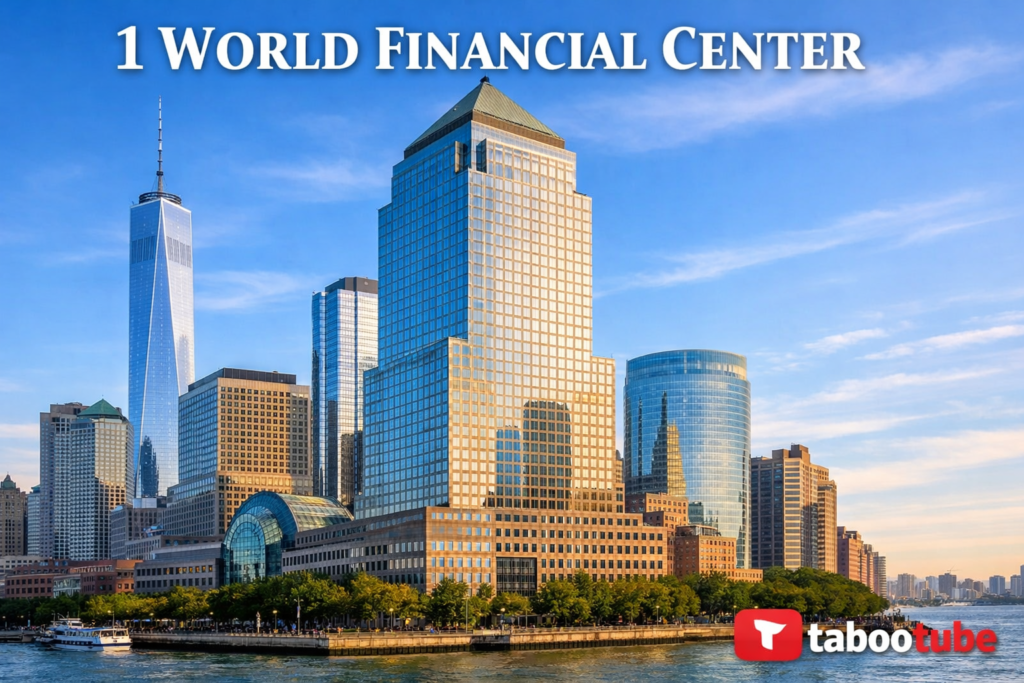
1 World Financial Center, also known as 200 Liberty Street, is one of the most recognizable office towers in New York City. It is a part of the larger World Financial Center complex located in Battery Park City, near the original site of the World Trade Center. Often referred to as 1WFC or One World Financial Center, this skyscraper is not just an office building but a symbol of modern architectural design and resilience in Manhattan. Designed by the renowned architect César Pelli in the 1980s, it was built to complement the skyline of Lower Manhattan while providing premium office space for leading businesses. The building is distinctive for its postmodern design, featuring a unique roof that is instantly recognizable and stands out among the surrounding towers. Over the years, 1 World Financial Center has housed many significant companies and has played a crucial role in the business and economic activities of New York City. Its combination of elegant design, strategic location, and historical importance makes it a key landmark that attracts not only office workers but also architecture enthusiasts and tourists interested in the story of New York’s evolving skyline.
History and Background of 1 World Financial Center
The story of 1 World Financial Center, now officially known as 200 Liberty Street, begins in the early 1980s when Lower Manhattan was undergoing significant redevelopment to revitalize the financial district and attract major businesses. Construction started in 1984, and the building was completed by 1986 as part of the larger World Financial Center complex, which was designed to transform the area into a modern hub for commerce and finance. The complex itself was conceived by the architectural firm César Pelli & Associates, which became famous for blending functionality with striking visual appeal, and 1WFC was their centerpiece. The building was designed with a postmodern aesthetic, featuring a stepped crown and distinctive roofline that immediately set it apart from the surrounding rectangular office towers. Its location along the Hudson River and in proximity to the original World Trade Center made it not only a prime location for businesses but also a prominent feature in New York City’s skyline. The tower’s original purpose was to house offices for top financial and media companies, including law firms, consulting agencies, and global news organizations, reflecting the ambitions of New York City to maintain its position as the world’s financial capital.
Over the years, 1 World Financial Center has witnessed both triumphs and challenges that have shaped its legacy. During the 1990s, the building became home to several key tenants, including prominent media outlets and financial institutions, which reinforced its reputation as a center for high-powered business activities. Its position within the World Financial Center complex also connected it to public spaces, retail areas, and the famous Winter Garden Atrium, making it a place where commerce and culture intersected. The building gained international attention in 2001 during the tragic events of September 11, suffering damage due to its proximity to the Twin Towers. However, swift restoration and renovation efforts not only repaired structural damage but also enhanced its resilience, updating safety systems and modernizing office spaces. The evolution of 1WFC, including its later rebranding as 200 Liberty Street, demonstrates how the building has adapted to changes in architecture, business needs, and urban development, cementing its role as a historic and functional landmark in Lower Manhattan. Its combination of elegant design, strategic location, and ability to withstand adversity has made it an enduring symbol of New York City’s architectural innovation and economic strength.
Location and Surroundings
1 World Financial Center, located at 200 Liberty Street in Manhattan, sits in the heart of Battery Park City, a neighborhood that lines the western edge of Lower Manhattan along the Hudson River. This strategic location provides sweeping views of the river, the Statue of Liberty, and the skyline of New Jersey across the water, making it not only a prestigious address for businesses but also an attractive destination for visitors and architecture enthusiasts. Its proximity to the original World Trade Center site, Wall Street, and major subway lines ensures unparalleled accessibility for professionals working in the financial district. The building is part of a carefully planned urban environment that blends commercial offices with public spaces, walkways, and landscaped plazas, reflecting the vision of creating a business hub that is also welcoming to the public. Being next to the waterfront allows for scenic promenades and recreational spaces, which give the area a balance between the fast-paced nature of finance and the calm of open green areas along the river. The design of the surrounding neighborhood, including nearby high-rises, retail areas, and parks, complements the tower’s architecture, creating a cohesive and visually striking environment that enhances Lower Manhattan’s skyline.
The surroundings of 1 World Financial Center are not only functional but also historically and culturally significant. The building is adjacent to the Winter Garden Atrium, a grand glass-enclosed space that serves as a public gathering area with shops, restaurants, and seasonal exhibitions, making it a hub for both business and leisure. The Hudson River Esplanade nearby provides space for walking, jogging, and cultural events, blending urban life with natural elements. Across the street, the Financial District buzzes with energy from banks, law firms, and trading companies, while tourist attractions such as the Battery Park, the 9/11 Memorial, and the ferry to the Statue of Liberty are just minutes away. This unique combination of accessibility, scenic surroundings, and cultural landmarks makes 1 World Financial Center not only a desirable location for offices but also a landmark in New York City that bridges the gap between commerce, history, and public life. Its location reinforces its status as an integral part of Lower Manhattan’s transformation into a modern financial and cultural hub, demonstrating how architecture and urban planning can work together to shape the city’s identity.
Architecture and Design
The architecture of 1 World Financial Center is a striking example of postmodern design, reflecting the vision of the renowned architect César Pelli, who sought to create buildings that were both functional and visually iconic. Unlike many of the glass-and-steel monoliths of its time, 1WFC features a stepped, tiered design crowned with a distinctive sloped roof that has become one of its signature elements, instantly recognizable in the Lower Manhattan skyline. The use of granite, glass, and steel gives the building a sense of permanence and elegance, while its clean lines and symmetrical proportions create a feeling of harmony with the surrounding towers of the World Financial Center complex. Inside, the design focuses on maximizing natural light and open spaces to create a comfortable and productive environment for office workers. The lobby features high ceilings, polished finishes, and wide corridors that guide visitors toward elevators and public areas, blending functionality with sophistication. Pelli’s design philosophy emphasized connecting buildings to their urban context, and 1WFC accomplishes this by visually complementing nearby structures while standing out with its unique roofline and stepped setbacks, giving the tower a sense of individuality without disrupting the cohesive look of the financial district.
Beyond its visual appeal, the design of 1 World Financial Center incorporates thoughtful structural and environmental considerations that were advanced for its time. The building’s framework uses reinforced concrete and steel to provide stability in a city known for high winds and potential seismic activity, while its layout ensures efficient vertical transportation and workspace utilization. The façade is designed to reflect light in ways that enhance the tower’s aesthetic appeal throughout the day, creating a dynamic interaction between the building and its surroundings. Pelli also integrated the tower seamlessly with the larger World Financial Center complex, ensuring that public spaces like plazas, walkways, and the Winter Garden Atrium form a connected environment that serves both tenants and visitors. The postmodern elements, such as decorative crowns and a play of geometric shapes, are not just ornamental; they symbolize the ambition and prestige of the financial institutions housed within. By balancing elegance, functionality, and contextual awareness, 1 World Financial Center exemplifies how thoughtful architecture can elevate a commercial building into a cultural and urban landmark that remains relevant decades after its completion.
The World Financial Center Complex
1 World Financial Center is not just a standalone building but an integral part of the World Financial Center complex, a larger development in Battery Park City that transformed Lower Manhattan into a modern hub for business, culture, and public life. Completed in the mid-1980s, the complex originally included four office towers, the Winter Garden Atrium, and extensive public plazas, all designed to create a cohesive and functional environment for both businesses and visitors. The towers are connected through landscaped courtyards, pedestrian walkways, and retail spaces, allowing for seamless movement and interaction within the complex. The Winter Garden Atrium, a 10-story glass-enclosed structure filled with palm trees and natural light, became the centerpiece of the complex, hosting art exhibitions, concerts, and community events. This integration of public spaces and private offices was a deliberate choice to balance commerce with community, reflecting a vision for Lower Manhattan that went beyond traditional corporate architecture. The positioning of 1 World Financial Center within this context allows it to serve not only as a prestigious office location but also as a visual anchor for the complex, complementing the other towers while maintaining its own unique identity through its stepped roof and elegant façade.
The World Financial Center complex also played a crucial role in redefining the interaction between architecture and urban life in New York City. By situating the buildings near the Hudson River, the developers created a waterfront experience that blends business activity with scenic views and recreational opportunities. The complex offered retail and dining spaces to serve both tenants and the public, encouraging foot traffic and social engagement within an area that was traditionally dominated by office buildings. The harmonious mix of design, functionality, and accessibility made the complex an early model of urban planning that emphasizes the coexistence of work, leisure, and culture. Over time, the complex has continued to evolve, with renovations and rebranding efforts, including the transformation of the World Financial Center into Brookfield Place, reflecting the city’s changing economic and cultural landscape. Despite these changes, 1 World Financial Center remains a cornerstone of the complex, symbolizing the ambitious vision of its designers and developers, and standing as a testament to the idea that commercial architecture can serve both business needs and the broader urban community.
Impact of 9/11 and Recovery
The events of September 11, 2001, had a profound effect on 1 World Financial Center, given its close proximity to the Twin Towers of the original World Trade Center. While the building was not completely destroyed, it sustained significant damage from falling debris, dust, and vibrations caused by the collapse of the neighboring towers. Windows shattered, interior ceilings and fixtures were destroyed, and portions of the façade were damaged, leaving the building temporarily uninhabitable. The attacks highlighted both the vulnerability and resilience of Lower Manhattan’s architecture, and 1 World Financial Center quickly became a symbol of the city’s determination to rebuild and recover. Despite the destruction around it, the structural integrity of the tower remained intact, demonstrating the foresight of its original design and the quality of construction. Its role in the aftermath of 9/11 extended beyond mere physical presence; it became a gathering point for displaced tenants from nearby buildings and a reminder of the economic and cultural importance of Lower Manhattan in the world financial landscape. In the weeks and months following the tragedy, restoration and cleanup efforts began in earnest, with engineers and architects working to repair damage while upgrading safety systems to meet new building standards that would protect occupants from future emergencies.
The recovery of 1 World Financial Center was not only about physical repair but also about restoring confidence and functionality to one of New York City’s key business hubs. Renovations included replacing broken windows, repairing damaged interiors, modernizing elevators, and improving ventilation and fire safety systems to create a safer and more resilient environment for tenants. The restoration process also involved rebranding and reintegrating the building within the broader redevelopment of Lower Manhattan, including the transformation of the surrounding World Financial Center complex into what is now known as Brookfield Place. This redevelopment emphasized creating an environment that balanced commercial activity with public engagement, including renovated public spaces, upgraded retail areas, and cultural venues. Today, 1 World Financial Center stands as a testament to resilience and adaptation, showing how architecture and urban planning can support recovery and renewal after a city faces unprecedented tragedy. Its story serves as a powerful example of how thoughtful design, strategic location, and community-focused planning can help a building not just survive but thrive in the face of historical challenges.
Tenants, Uses, and Interior Spaces
1 World Financial Center has long been recognized as a premier office building, attracting some of the world’s leading companies in finance, media, and consulting. Over the years, it has housed prominent tenants including the Associated Press, Deloitte, and Dow Jones, among others, making it a central hub for global business operations in Lower Manhattan. The building’s design and layout were carefully planned to accommodate large corporate offices while offering flexibility for diverse business needs, including executive suites, collaborative workspaces, and meeting rooms. Its interior spaces are characterized by high ceilings, wide corridors, and abundant natural light, creating an environment that promotes productivity and comfort. Beyond office use, the building also integrates amenities for employees such as cafes, conference centers, and access to retail spaces within the larger World Financial Center complex. This combination of functional office design and tenant-focused amenities has made 1 World Financial Center an attractive and enduring choice for businesses seeking prestige, accessibility, and a strong connection to the heart of New York City’s financial district.
The building’s interior and operational strategy extend beyond mere office space, reflecting a thoughtful approach to integrating commercial, cultural, and social elements. Public areas such as the lobby and corridors are designed with polished finishes and open layouts, giving visitors a sense of grandeur while ensuring efficient flow throughout the building. The strategic connection to the Winter Garden Atrium and surrounding plazas allows tenants to enjoy public spaces that also serve as gathering areas for business and cultural events. The mix of office, retail, and public amenities demonstrates a modern approach to urban commercial architecture, where a building functions not only as a workspace but as a dynamic part of the city’s social and economic fabric. Tenants benefit from proximity to public transit, restaurants, and waterfront views, while the building maintains a prestigious image that reinforces the reputation of the companies it houses. In essence, 1 World Financial Center is more than an office tower; it is a thoughtfully designed environment where business, convenience, and culture intersect, making it a vital component of Lower Manhattan’s identity as a world-class financial and cultural hub.
Changes Over Time
Over the decades, 1 World Financial Center has undergone significant changes that reflect both shifts in New York City’s business landscape and the evolving needs of modern architecture. In 2014, the building was officially rebranded as 200 Liberty Street as part of the larger redevelopment of the World Financial Center into Brookfield Place, signaling a new era of modernization and urban integration. Renovations included updated office interiors, modernized elevators, improved HVAC systems, and upgraded safety features to meet contemporary building standards. These improvements were designed not only to enhance the comfort and efficiency of office spaces but also to attract new tenants seeking a prestigious address with modern amenities. The surrounding complex was simultaneously revitalized, with new retail spaces, restaurants, and public areas that transformed the site into a destination for both professionals and visitors. Despite these changes, the building has retained its iconic postmodern design, including the stepped crown and sloped roof, preserving its status as a recognizable and beloved feature of the Manhattan skyline while embracing functional and aesthetic updates that ensure its continued relevance.
The evolution of 1 World Financial Center also highlights its adaptability to broader urban and economic developments in Lower Manhattan. Following the events of 9/11, the building’s restoration emphasized resilience and safety, setting a precedent for future renovations in the area. The integration of modern technology, energy-efficient systems, and contemporary design elements has allowed the building to maintain its competitiveness in New York City’s premium office market. Over time, its tenants have diversified to include not only financial institutions and media companies but also technology and professional services firms, reflecting changes in the city’s economy and global business trends. The building’s transformation illustrates how historical landmarks can evolve without losing their identity, blending tradition with innovation to meet the demands of a dynamic urban environment. Today, 200 Liberty Street continues to serve as a symbol of strength, adaptability, and architectural excellence, demonstrating how thoughtful design and strategic planning allow a building to remain a central figure in one of the world’s most iconic financial districts.
Visitor Information and Interesting Facts
1 World Financial Center, now known as 200 Liberty Street, is not only a center for business but also an interesting destination for visitors who wish to explore Lower Manhattan. While the building primarily serves as an office tower, its connection to the larger Brookfield Place complex makes it accessible to the public through retail spaces, dining options, and the stunning Winter Garden Atrium. Tourists can enjoy the grand glass-enclosed space filled with palm trees and natural light, which hosts art exhibits, live music, and cultural events throughout the year. The location along the Hudson River provides scenic views, walking paths, and outdoor seating, creating a harmonious balance between urban life and nature. Visitors can also explore nearby landmarks such as Battery Park, the 9/11 Memorial, and ferry terminals to the Statue of Liberty and Ellis Island, making 1 World Financial Center a convenient stop for both sightseeing and understanding the architectural and economic history of New York City. Its integration of public spaces with office functions demonstrates how urban buildings can serve multiple roles, offering experiences for professionals, tourists, and local residents alike.
The building itself is full of interesting facts and unique features that highlight its architectural and historical significance. Designed by César Pelli, the tower’s stepped roof and postmodern design make it instantly recognizable, while its structural resilience allowed it to withstand the effects of the 9/11 attacks with limited damage compared to its neighbors. Inside, the lobbies and corridors feature polished finishes, high ceilings, and wide-open spaces that reflect both elegance and functionality. Over the years, it has been home to major global companies such as Deloitte, Dow Jones, and the Associated Press, linking it to significant events in business and media. The building also represents a successful example of urban revitalization, transforming Lower Manhattan into a thriving financial and cultural hub. For those interested in architecture, history, or business, 1 World Financial Center offers a tangible connection to New York City’s evolution over the past four decades, illustrating how thoughtful design and strategic location can create a landmark that continues to inspire and serve multiple generations.
Comparison with Other NYC Landmarks
When looking at 1 World Financial Center in the context of New York City’s iconic skyline, it is clear that this building holds a unique place among the city’s architectural landmarks. Unlike the soaring heights of One World Trade Center, which was built after 9/11 as the tallest building in the Western Hemisphere, 1WFC is more modest in scale but equally significant in its design and historical role. Its postmodern stepped design and sloped roof set it apart from the simple rectangular towers common in Lower Manhattan, giving it a distinctive identity that makes it instantly recognizable. While One World Trade Center represents resilience and the future of New York, 1WFC represents the ambition and sophistication of the city’s financial power during the late 20th century. In comparison to other nearby skyscrapers, such as the original Twin Towers or the Woolworth Building, 1WFC balances functionality with aesthetic detail, offering both practical office space and an architectural statement that enhances the overall harmony of the area. Its integration with public spaces, including the Winter Garden Atrium and plazas, also differentiates it from purely commercial structures by inviting interaction and community engagement, which is rare for buildings of its era.
In addition to architectural comparisons, 1 World Financial Center also stands out in terms of historical and cultural relevance. While many New York City landmarks are celebrated for singular achievements, 1WFC’s significance lies in its combination of business importance, urban planning, and resilience. It has survived natural wear, economic shifts, and the challenges posed by the September 11 attacks while continuing to serve as a premier office location and public gathering space. Its proximity to other landmarks, including Battery Park, the 9/11 Memorial, and the Hudson River waterfront, further situates it within a network of sites that define Lower Manhattan’s character. Unlike the flashy tourist attractions, 1WFC quietly asserts its importance through consistent functionality, elegance, and adaptability over decades. Its story complements the narratives of other skyscrapers, showing how buildings can evolve to meet changing urban demands while preserving architectural identity. In this way, 1 World Financial Center is both a landmark in its own right and a vital part of New York City’s rich architectural and cultural tapestry, representing the intersection of design, commerce, and history in a way that few other buildings achieve.
Conclusion – Why 1 World Financial Center Matters
1 World Financial Center, now known as 200 Liberty Street, holds a lasting significance in New York City’s history, architecture, and business landscape. As part of the original World Financial Center complex, it symbolizes the city’s ambition during the 1980s to create a modern financial hub that could rival global centers while blending seamlessly with public and cultural spaces. Its postmodern design, featuring the iconic stepped roof and elegant façade, stands as a testament to thoughtful architecture that balances visual appeal with functionality. Over the decades, the building has hosted some of the world’s leading financial institutions, media companies, and professional services firms, reflecting its importance as a center for global commerce. The resilience of 1WFC, demonstrated by its recovery from the 9/11 attacks and its ability to adapt to modern office requirements, further emphasizes its role as more than just a skyscraper; it is a symbol of strength, continuity, and innovation in one of the world’s most dynamic cities. The building’s strategic location along the Hudson River, its connection to the Winter Garden Atrium, and its integration with the surrounding urban environment ensure that it remains a vital component of Lower Manhattan’s economic and cultural fabric.
Beyond its practical functions, 1 World Financial Center also represents the intersection of history, design, and community in New York City. It illustrates how commercial architecture can evolve over time, maintaining relevance while honoring its original vision. The building’s blend of aesthetic sophistication, resilience, and accessibility makes it a landmark that continues to attract attention from business leaders, tourists, and architecture enthusiasts alike. It contributes to the character of Battery Park City, connects with surrounding public spaces, and offers a window into the story of New York’s growth, recovery, and ambition. By embodying both the past and the present, 1WFC serves as a reminder that buildings are more than structures; they are living elements of a city’s identity, capable of shaping culture, facilitating business, and inspiring generations. Its enduring presence in the skyline is a tribute to the vision of its architects, the adaptability of its design, and the resilience of the city itself, cementing 1 World Financial Center as an essential part of New York City’s legacy and ongoing story.